Retrospective 2001 — Topic Guide
The year 2001 profoundly changed the beginning of the twenty-first century. The September 11 attacks transformed international relations and led to war in Afghanistan. At the same time, the Internet continued to expand, new technological products appeared, and several major cultural works made their debut. The year was also marked by economic and political crises.
A New President in the United States
George W. Bush took office on January 20 following the disputed election of 2000. His administration promoted tax cuts, an energy policy favourable to domestic production, and an international approach different from that of Bill Clinton.
Early in his presidency, relations with China became tense. In April, an American surveillance aircraft collided with a Chinese fighter jet near Hainan Island. The American crew was detained for several days before being released.
The September 11 Attacks
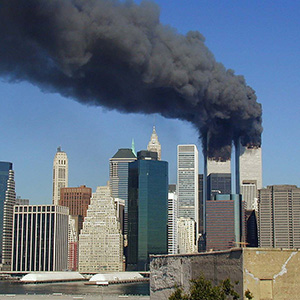
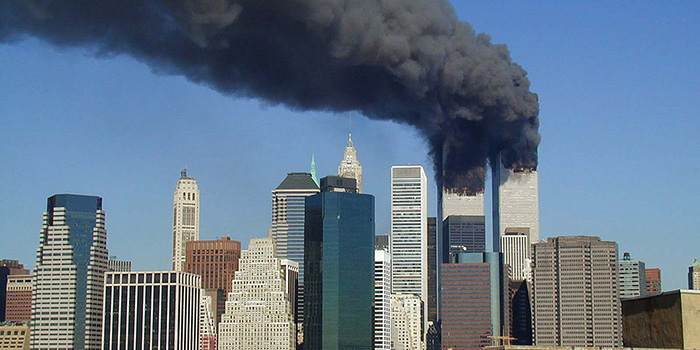
On September 11, members of Al-Qaeda hijacked four passenger aircraft in the United States. Two planes struck the towers of the World Trade Center in New York, which later collapsed. A third aircraft hit the Pentagon near Washington. The fourth crashed in Pennsylvania after passengers and crew members fought back.
Nearly 3,000 people were killed. Images of the attacks were broadcast live around the world and caused an enormous shock.
The attacks quickly changed airport security measures, intelligence priorities, and American foreign policy. The government intensified the fight against terrorism and passed the Patriot Act, which expanded certain investigative and surveillance powers.
The War in Afghanistan
The United States accused Osama bin Laden and Al-Qaeda of organizing the attacks. The Taliban regime, which then controlled most of Afghanistan, refused to hand over bin Laden under the conditions demanded.
On October 7, the United States and its allies launched a military intervention. Bombing and the advance of Afghan forces opposed to the Taliban quickly led to the fall of Kabul and the regime.
An interim administration led by Hamid Karzai was established at the end of the year. The war, initially presented as an operation against Al-Qaeda and the Taliban, would continue for nearly twenty years.
Conflicts and International Tensions
The Israeli-Palestinian conflict remained extremely violent during the Second Intifada. Attacks, military operations, and clashes caused many civilian deaths and pushed the possibility of a peace agreement further away.
In Macedonia, fighting opposed government forces and armed Albanian groups. An agreement signed in August sought to end the violence and strengthen the rights of the Albanian minority.
In December, China became a member of the World Trade Organization. This membership accelerated its integration into the global economy and transformed international trade.
Canada and the Summit of the Americas
From April 20 to 22, Quebec City hosted the Summit of the Americas. Political leaders discussed, among other issues, a proposed Free Trade Area of the Americas.
The meeting attracted tens of thousands of demonstrators who opposed economic globalization or demanded greater transparency. A large security fence surrounded part of the downtown area, while clashes occurred between some protesters and police forces.
After September 11, Canada participated in the intervention in Afghanistan and strengthened its cooperation with the United States on border security.
Economy and Financial Scandals
The global economy slowed following the bursting of the technology bubble that had begun in 2000. The attacks worsened the difficulties faced by several industries, especially aviation and tourism.
In December, the American company Enron filed for bankruptcy protection. The corporation had hidden part of its debt and presented a misleading picture of its financial situation.
The scandal destroyed the savings of many employees and investors. It raised questions about auditing, corporate governance, and conflicts of interest.
Argentina also experienced a severe economic and social crisis. The government restricted bank withdrawals, demonstrations erupted, and several presidents succeeded one another within a matter of days.
Science, Space, and Technology
The Russian space station Mir was deliberately taken out of orbit on March 23 after fifteen years of service. Its debris fell into an uninhabited area of the Pacific Ocean.
In April, businessman Dennis Tito became the first space tourist after paying to stay aboard the International Space Station.
Wikipedia was launched on January 15. This collaborative encyclopedia allowed Internet users to create and edit articles. Its open model sparked debates about reliability, but it quickly transformed access to knowledge.
Apple released Mac OS X in the spring and introduced the iPod in October. The digital music player could hold about one thousand songs and helped change listening habits. Microsoft released Windows XP, which became one of the most widely used operating systems of its era.
Cinema, Literature, and Music
The cinema of 2001 launched several major film series. The first Harry Potter movie adapted J. K. Rowling’s novel, while The Lord of the Rings: The Fellowship of the Ring opened the trilogy directed by Peter Jackson.
Shrek renewed animated filmmaking through its humour and parody of fairy tales. Monsters, Inc., A Beautiful Mind, Moulin Rouge!, and Amélie were also among the year’s notable films.
In music, Alicia Keys achieved major success with her debut album, while the Strokes and the White Stripes contributed to the return of a more stripped-down rock sound. The iPod and digital file sharing already signalled a transformation of the music industry.
Major Sporting Events
In Formula One, Michael Schumacher won a second consecutive championship with Ferrari and dominated the season.
In tennis, Goran Ivanišević won Wimbledon after receiving a wild card for the tournament. Jennifer Capriati won the Australian Open and the French Open, completing a remarkable return to the highest level.
The Los Angeles Lakers won a second consecutive NBA championship. In baseball, the Arizona Diamondbacks defeated the New York Yankees in a World Series that carried particular emotional significance after the attacks.
Notable Deaths
The year was marked by the death of Congolese president Laurent-Désiré Kabila, who was assassinated in January. Singer and guitarist George Harrison, a former member of the Beatles, died in November.
Actor Jack Lemmon, writer Douglas Adams, singer Aaliyah, and musician John Lee Hooker were also among the notable figures who died in 2001.
Quiz questions preview
-
This film released in 2001 will be elected as the best film of the year at the 2002 Academy Awards.
A Beautiful Mind | Crouching Tiger, Hidden Dragon | Moulin Rouge | Traffic -
Which film won the Palme d'Or at the Cannes Film Festival?
The Pianist | Pulp Fiction | The Son's Room (La stanza del figlio) | The Tree of Life -
Which player won the tennis Wimbledon Championship men's singles?
Goran Ivanisevic | Andre Agassi | Pat Rafter | Roger Federer -
Who was the president of Iran?
Mahmoud Ahmadinejad | Hassan Rohani | Mohammad Khatami | Ali Khamenei -
This movie star, who died on June 3, played in masterpieces such as "La Strada" or "Lawrence of Arabia".
Anthony Quinn | Peter O'Toole | Omar Sharif | Jack Palance

