
Retrospective 2022 — Topic Guide
The year 2022 was dominated by Russia’s invasion of Ukraine, which disrupted European security and the global economy. It was also marked by high inflation, the death of Elizabeth II, protest movements in Iran, the first images from the James Webb Space Telescope, and Argentina’s victory at the FIFA World Cup.
The Invasion of Ukraine
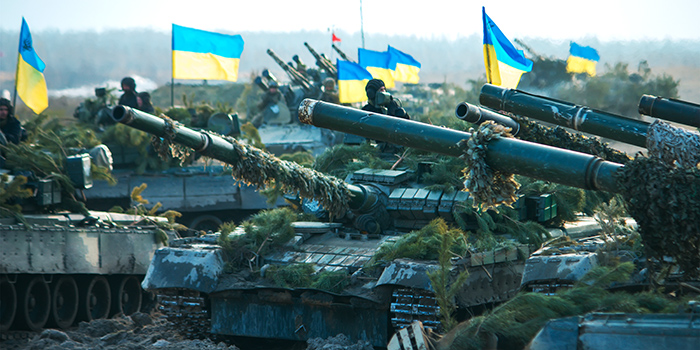
On February 24, Russia launched a full-scale invasion of Ukraine. Vladimir Putin presented the operation as necessary, while Ukraine and most Western countries regarded it as an unjustified act of aggression.
Russian forces advanced toward Kyiv, Kharkiv, and several cities in the south and east. Ukrainian resistance, however, prevented the rapid capture of the capital. Russia later withdrew its troops from the north to concentrate its operations in the Donbas and along the Black Sea coast.
The fighting caused extensive destruction, especially in Mariupol. The discovery of civilian bodies in Bucha prompted international outrage and accusations of war crimes.
Millions of Ukrainians fled the country or were displaced within it. The European Union, the United States, Canada, and other allies provided Ukraine with military, financial, and humanitarian assistance. They also imposed heavy sanctions on Russia.
In September, Ukraine recaptured much of the Kharkiv region during a rapid counteroffensive. In November, Russian forces withdrew from Kherson, the only regional capital they had occupied since the beginning of the invasion.
Energy Crisis and Inflation
The war caused sharp increases in the prices of energy, grain, and many raw materials. Russia reduced its gas supplies to Europe, while European countries searched for alternative suppliers.
Inflation, already fuelled by disruptions related to the pandemic, reached levels not seen in several decades. Central banks raised interest rates in an attempt to slow price increases.
Households faced higher costs for food, housing, transportation, and electricity. Fears of a recession remained widespread.
Political Changes
In the United Kingdom, Boris Johnson announced his resignation following a series of scandals. Liz Truss succeeded him in September, but her economic program triggered a crisis. She resigned after only 49 days in office and was replaced by Rishi Sunak.
In Italy, Giorgia Meloni became the first woman to lead the government. In Brazil, Luiz Inácio Lula da Silva narrowly defeated incumbent president Jair Bolsonaro.
In the United States, Republicans won a small majority in the House of Representatives in the midterm elections, while Democrats retained control of the Senate. In June, the Supreme Court overturned Roe v. Wade, ending federal protection for abortion rights.
Protests in Iran and Other Crises
In September, the death of Mahsa Amini after her arrest by the morality police triggered widespread protests in Iran. Women removed or burned their headscarves, while the slogan “Woman, Life, Freedom” became a symbol of the movement.
The authorities harshly repressed the demonstrations. Hundreds of people were killed, and thousands were arrested.
In Sri Lanka, a severe economic crisis caused shortages of fuel, food, and medicine. Mass protests led to the flight and resignation of President Gotabaya Rajapaksa.
In Japan, former prime minister Shinzo Abe was assassinated in July while delivering a campaign speech.
The Death of Elizabeth II
Queen Elizabeth II died on September 8 at Balmoral Castle after a reign of more than 70 years. Her son became king under the name Charles III.
The Queen’s death led to a period of national mourning and numerous ceremonies. Her state funeral brought together leaders and representatives from many countries in London.
A few months earlier, the United Kingdom had celebrated her Platinum Jubilee.
COVID-19 and the Return to Normal Life
The pandemic continued, but many countries lifted most of their public health restrictions. Travel, performances, and large gatherings gradually resumed.
The Omicron variant and its subvariants still caused major waves of infection, but vaccination and acquired immunity generally reduced the proportion of severe cases.
In China, the “zero-COVID” policy led to strict lockdowns, especially in Shanghai. Unusual protests broke out near the end of the year, after which the government began rapidly abandoning the strategy.
Science, Space, and Technology
In July, NASA released the first scientific images from the James Webb Space Telescope. They revealed extremely distant galaxies, nebulae, and details never before observed with such precision in infrared light.
The DART mission successfully altered the orbit of Dimorphos slightly by crashing a spacecraft into the asteroid. The experiment demonstrated that it might be possible to deflect an object threatening Earth.
In December, American scientists announced a major experimental breakthrough in nuclear fusion.
On November 30, OpenAI made ChatGPT available to the public. The tool quickly drew attention to the possibilities and risks of generative artificial intelligence.
Popular Culture
In cinema, Top Gun: Maverick became one of the year’s biggest successes. Avatar: The Way of Water brought audiences back to Pandora, while Everything Everywhere All at Once stood out through its blend of science fiction, action, and family drama.
In music, Bad Bunny achieved worldwide success with Un Verano Sin Ti. Beyoncé released Renaissance, Taylor Swift published Midnights, and Harry Styles topped the charts with “As It Was.”
Streaming platforms continued to expand. Stranger Things returned with a highly popular fourth season, while Wednesday quickly became an international phenomenon.
Major Sporting Events
The Winter Olympic Games took place in Beijing in February under strict health measures. Norway finished at the top of the medal table.
The FIFA World Cup was held in Qatar in November and December. The tournament prompted criticism concerning migrant workers’ rights and civil liberties.
Argentina defeated France in the final after a spectacular match decided by a penalty shootout. Lionel Messi thereby won the first World Cup of his career.
In tennis, Rafael Nadal won the Australian Open and the French Open. Serena Williams announced that she was stepping away from professional tennis after the US Open.
Max Verstappen retained his Formula One world championship. In hockey, the Colorado Avalanche won the Stanley Cup.
Notable Deaths
In addition to Elizabeth II and Shinzo Abe, the year was marked by the death of Mikhail Gorbachev, the final leader of the Soviet Union.
The sporting world lost Pelé, a three-time World Cup champion with Brazil. Cinema and culture also mourned Jean-Luc Godard, Angela Lansbury, Sidney Poitier, and Olivia Newton-John.
Quiz questions preview
-
Who won the Oscar for Best Director?
David Fincher | Jane Campion | Kenneth Branagh | Steven Spielberg -
Who won the presidential election in Brazil in October?
Simone Tebet | Jair Bolsonaro | Dilma Rousseff | Luiz Inácio Lula da Silva -
Which countries have started the process of joining the North Atlantic Treaty Organization (NATO)?
Norway and Denmark | Sweden and Finland | Sweden and Norway | Denmark and Finland -
In which country did the "zero COVID-19" strategy provoke demonstrations at the end of November?
In Iran | In India | In South Korea | In China -
Who succeeded Liz Truss as head of the British government?
Rishi Sunak | Boris Johnson | Stephen Barclay | Dominic Raab

