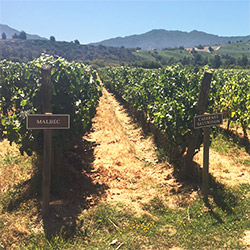

Grape Varieties — Topic Guide
Grape varieties are the different types of grapevines cultivated to produce grapes. Each has its own characteristics, including colour, aromas, acidity, sugar content, skin thickness, and ripening time. Their identity strongly influences the style of a wine, although climate, soil, and the producer’s expertise also play a decisive role.
What Is a Grape Variety?
A grape variety is a cultivated type of grapevine with specific genetic and physical characteristics. It can be identified by the shape of its leaves, the size of its clusters, the colour of its berries, the thickness of its skin, and its ripening period.
Most major grape varieties used in winemaking belong to the species Vitis vinifera, which originated in Europe and Western Asia. This species includes thousands of varieties, although only a relatively small proportion are cultivated on a large scale.
Grape varieties are generally propagated through cuttings or grafting. This form of vegetative reproduction preserves the same genetic characteristics from one generation to the next. A vine grown from a seed, by contrast, does not reproduce exactly the qualities of the plant that produced it.
A grape variety should not be confused with an appellation or a region. Chardonnay is a grape variety, while Chablis is a French appellation in which this grape is used. Similarly, Champagne is a sparkling wine from a specific region, not the name of a grape.
Red and White Grape Varieties
Grape varieties are often classified according to the colour of their skins. Black grapes, sometimes called red grapes, have blue, purple, or nearly black skins. They can be used to produce red wines, rosé wines, and, in some cases, white wines.
White grapes range in colour from pale green to golden yellow. They are mainly used for white wines, but may also be included in certain sparkling wines or particular blends.
The colour of wine comes largely from pigments found in the skins. The juice of many black grapes is almost colourless. The skins must therefore remain in contact with the juice to produce a red wine.
Some varieties have intermediate colours. Pinot gris, for example, has pinkish or bluish-grey skin, even though it is generally treated as a white grape variety.
The Influence of Grape Variety on Wine
Each grape variety has a general profile, but it does not always produce the same kind of wine. Its characteristics vary according to the region, vintage, yield, grape ripeness, and winemaking methods.
Several factors distinguish one variety from another:
-
Sugar content influences the potential alcohol level.
-
Acidity provides freshness and contributes to ageing potential.
-
Tannins, found mainly in the skins and seeds, give structure to red wines.
-
Aromatic compounds may suggest fruits, flowers, spices, or plants.
-
Skin thickness influences colour, tannins, and the grape’s resistance.
-
Berry size affects the proportion of juice to skin.
-
Ripening time determines the regions where the variety can achieve a good balance.
Aromatic descriptions do not mean that fruits or spices have been added to the wine. They are used to express sensations produced naturally by the grapes, fermentation, and ageing.
International Grape Varieties
Some grape varieties are grown in a large number of countries. They are sometimes described as international varieties because they have adapted to regions far from their places of origin.
Cabernet Sauvignon
Cabernet sauvignon is one of the world’s most widely planted red grape varieties. It is believed to be the result of a natural crossing between cabernet franc and sauvignon blanc.
Its thick skin generally produces deeply coloured, tannic wines with good ageing potential. Its aromas may suggest blackcurrant, dark fruit, cedar, bell pepper, or tobacco.
It plays a major role in Bordeaux wines and is also widely grown in California, Chile, Australia, South Africa, and many other regions.
Merlot
Merlot usually produces softer wines that become approachable sooner than cabernet sauvignon. It may evoke plum, black cherry, berries, and sometimes chocolate.
Very important in Bordeaux, particularly on the Right Bank, it is also grown in many countries. It may be made as a single-variety wine or used to soften more tannic blends.
Pinot Noir
Pinot noir is an ancient grape variety particularly associated with Burgundy. Its relatively thin skin produces wines that are generally less deeply coloured than those made from cabernet sauvignon or syrah.
Its aromas often suggest cherry, raspberry, strawberry, and, with age, forest floor or mushrooms. It is sensitive to climatic conditions and demanding in the vineyard.
Pinot noir is also used in the production of many sparkling wines, particularly Champagne.
Syrah
Syrah produces deeply coloured, structured, and often spicy wines. Its aromas may suggest blackberry, violet, black pepper, smoke, or olive.
It is especially important in the Rhône Valley, where it is used in the wines of the northern part of the region. Under the name shiraz, it also occupies a major place in Australia.
Chardonnay
Chardonnay is one of the most widely planted white grape varieties. It can produce very different styles depending on the climate and winemaking method.
In cool regions, it often shows aromas of apple, lemon, or white-fleshed fruit. In warmer climates, it may suggest peach, pineapple, or other tropical fruits.
It is closely associated with Burgundy and is also used in many sparkling wines. Barrel ageing and malolactic fermentation may give it notes of butter, vanilla, or toast.
Sauvignon Blanc
Sauvignon blanc is known for its freshness and pronounced acidity. It may develop aromas of citrus fruit, gooseberry, passion fruit, fresh-cut grass, or boxwood.
It is grown notably in the Loire Valley, Bordeaux, New Zealand, Chile, and South Africa. It can produce very crisp dry wines or be used in sweet wines.
Riesling
Riesling is a white grape variety of particular importance in Germany and Alsace. It generally retains high acidity even when the grapes achieve a high level of ripeness.
Its wines may be dry, off-dry, or sweet. Their aromas often evoke citrus fruit, apple, peach, flowers, and, with age, certain mineral or petroleum-like notes.
Its high acidity allows many riesling wines to age well.
Regional Grape Varieties
Alongside international varieties, many regions preserve grapes that are closely connected to their history and identity.
Sangiovese dominates several Tuscan wines, including Chianti. It often produces wines marked by cherry, herbs, and firm acidity.
Nebbiolo is associated with Italy’s Piedmont region, particularly the wines of Barolo and Barbaresco. It produces pale-coloured but highly tannic wines capable of ageing for a long time.
Tempranillo plays a central role in Spain, especially in Rioja and Ribera del Duero. Its wines may evoke red fruit, leather, spices, and tobacco.
Touriga nacional is one of Portugal’s major grape varieties. It is used in the production of Port as well as still red wines.
Grüner veltliner is strongly associated with Austria. It generally produces fresh white wines, sometimes marked by citrus fruit, herbs, and a peppery note.
Chenin blanc is especially important in the Loire Valley and South Africa. Its high acidity allows it to produce dry, sparkling, or sweet wines.
Malbec originated in France but has become emblematic of Argentina. It often produces deeply coloured wines with aromas of dark fruit and violets.
Carménère, once widely planted in Bordeaux, is now strongly associated with Chile.
Early- and Late-Ripening Varieties
Not all grape varieties ripen at the same time. Early-ripening varieties reach maturity relatively quickly and can adapt to regions with shorter growing seasons.
Pinot noir and chardonnay are considered relatively early-ripening. They can mature in cool climates, but may lose acidity or produce overly rich grapes in very warm regions.
Cabernet sauvignon and mourvèdre ripen later. They need a sufficiently long and warm growing season to develop their aromas fully and soften their tannins.
A grape variety poorly suited to the climate may produce unbalanced fruit. In a region that is too cool, a late-ripening variety may retain vegetal flavours and excessive acidity. In a region that is too warm, an early-ripening variety may lose its freshness and accumulate sugar too quickly.
Single-Variety Wines and Blends
A single-variety wine is made mainly or entirely from one grape variety. Depending on local regulations, a bottle may carry the name of a grape without being made exclusively from that variety.
Displaying the grape variety on the label is particularly common in many New World countries. It allows consumers to identify a familiar profile easily, such as chardonnay or cabernet sauvignon.
A blend combines several grape varieties. This practice makes it possible to bring together their different qualities. One variety may contribute colour and tannins, another softness, and a third acidity or aromas.
In Bordeaux, cabernet sauvignon, merlot, cabernet franc, petit verdot, and other varieties may be blended. In the southern Rhône Valley, grenache is often combined with syrah and mourvèdre.
Blends may be determined by regional tradition, the conditions of the vintage, or the style sought by the producer.
Synonyms
The same grape variety may have several names depending on the region or country. Syrah is known as shiraz in Australia and in certain other markets.
Tempranillo has many synonyms in Spain, including tinta del país, tinta de toro, and cencibel. Grenache is called garnacha in Spanish and cannonau in Sardinia.
These differences in naming may create the impression that they are distinct varieties. Genetic analysis now makes it possible to confirm or disprove relationships between grapes cultivated under different names.
Crossings, Hybrids, and Clones
A crossing results from the union of two varieties that generally belong to the same species. Müller-thurgau, for example, was created in the late 19th century from riesling and madeleine royale.
A hybrid results from crossing grapevines belonging to different species. Many hybrids were developed to resist cold, diseases, or other difficult conditions.
They are particularly useful in regions where Vitis vinifera struggles to survive. Vidal, used notably in the production of Canadian icewine, has good resistance to cold.
A clone is a particular selection within the same grape variety. Natural mutations can produce differences in yield, cluster size, ripening time, or aromatic profile.
Pinot noir, pinot gris, and pinot blanc belong to the same genetic family and arose through colour mutations.
Threatened and Rediscovered Diversity
Modern viticulture has concentrated on a relatively limited number of well-known grape varieties that are easy to market. This standardization has sometimes led to the abandonment of less productive or less famous local varieties.
In recent years, some producers have sought to preserve or reintroduce older grape varieties. These may offer distinctive flavours, better adaptation to local conditions, or valuable resistance to heat and drought.
Conservation vineyards, nurseries, and research centres maintain collections to protect this genetic heritage. Such diversity could become particularly important in the face of emerging diseases and climate change.
Quiz questions preview
-
Which grape variety must represent at least 20% of the declared area in AOC La Clape rouge?
Syrah | Carignan | Grenache | Mourvèdre -
How many grape varieties are found in France?
About 500 | About 400 | About 200 | About 300 -
Among these wine names, which one does not exist?
Va Te Faire Boire | Vin Boire un Coup à la Maison | La Scie Rose | Le Vin de Merde -
Which grape variety, once distilled, produces an excellent brandy?
Montils | Petit Manseng | Gringet | Baroque -
What is the dominant grape variety in AOP Beaumes de Venise rouge?
Syrah | Grenache | Mourvèdre | Carignan

