
Firsts — Topic Guide
“Firsts” represent turning points in human history. They mark the moment when a limit once considered impossible is finally crossed. Behind every achievement lie years of experimentation, failure, rivalry and often the work of many people, even though a single name may eventually come to symbolize the success.
Exploring Unknown Territories
Great explorations were long among the most visible firsts. They expanded maps, opened new routes and changed humanity’s understanding of the world. These journeys, however, were rarely the work of a single person.
The expedition that left Spain under the command of Ferdinand Magellan completed the first circumnavigation of the globe between 1519 and 1522. Magellan died in the Philippines before the voyage ended, and Juan Sebastián Elcano brought the last remaining ship back to Europe.
At the beginning of the 20th century, the polar regions became the setting for intense competition. Norwegian explorer Roald Amundsen reached the South Pole in December 1911, several weeks before the British expedition led by Robert Falcon Scott. In 1953, Edmund Hillary and Tenzing Norgay completed the first confirmed ascent of Mount Everest.
Other achievements opened new paths:
-
Joshua Slocum completed the first solo circumnavigation by sailboat in 1898.
-
John Alcock and Arthur Brown made the first nonstop transatlantic flight in 1919.
-
Charles Lindbergh completed the first solo nonstop transatlantic flight in 1927.
-
Jacques Piccard and Don Walsh reached the bottom of the Mariana Trench aboard the bathyscaphe “Trieste” in 1960.
Understanding the World Through Science
Scientific firsts are not always sudden discoveries. They often result from a new method of observation or an instrument capable of revealing what had previously remained invisible.
In 1665, Robert Hooke used the word “cell” after examining cork through a microscope. A few years later, Antoni van Leeuwenhoek described microorganisms using lenses of exceptional precision.
In 1895, Wilhelm Röntgen discovered X-rays, making it possible to see inside the human body without surgery. At the beginning of the 20th century, Marie Curie became the first woman to receive a Nobel Prize and later the first person to win two Nobel Prizes in two different scientific fields.
The identification of the structure of DNA in 1953 provided an essential foundation for modern genetics. In 2012, the experimental confirmation of the Higgs boson validated a fundamental part of the model used to describe elementary particles.
Treating Illness and Extending Life
Medical firsts have often transformed deadly diseases into conditions that can be prevented or treated.
Edward Jenner carried out a foundational experiment in smallpox vaccination in 1796. In 1846, a successful public demonstration of ether anaesthesia showed that surgery could be performed without conscious pain.
In 1928, Alexander Fleming observed the antibacterial effects of penicillin. Its large-scale medical use became possible only later through the work of other researchers and the production methods developed during the Second World War.
Several major medical milestones followed during the 20th century:
-
In 1954, the first successful long-term organ transplant was achieved with a kidney transplant between identical twin brothers.
-
In 1967, Christiaan Barnard performed the first human heart transplant.
-
In 1978, Louise Brown became the first child born through in vitro fertilization.
-
In 1980, the World Health Organization declared smallpox eradicated, the first human disease to be eliminated worldwide.
Inventing New Tools
Major inventions usually result from a series of improvements, which can make it difficult to identify a single true first.
Around 1450, Johannes Gutenberg developed a European printing system using movable metal type. This technique greatly accelerated the reproduction of books and the spread of knowledge.
During the 19th century, the telegraph, telephone and sound recording reduced distances between people. Alexander Graham Bell received a major American telephone patent in 1876. The following year, Thomas Edison introduced the phonograph, which could record and reproduce sound.
Computing introduced a new series of firsts. ENIAC, unveiled in 1946, was among the first general-purpose electronic digital computers. In 1969, the earliest exchanges over ARPANET helped prepare the development of the Internet. In 1991, the first website became publicly accessible through the system created by Tim Berners-Lee.
Transforming Transportation
Each new form of transportation changed travel speeds, commerce and the organization of societies.
In 1825, the Stockton and Darlington Railway in England became the first public railway to use steam locomotives. In 1886, Karl Benz patented a gasoline-powered vehicle often regarded as the first modern automobile.
On December 17, 1903, the Wright brothers completed a powered, controlled and sustained flight in a heavier-than-air aircraft. Their machine travelled only a short distance, but it proved that an airplane could take off, remain airborne and be directed.
In 1969, Concorde completed its first flight. When the supersonic aircraft later entered commercial service, it greatly reduced the duration of some transatlantic journeys.
Leaving Earth
Space exploration produced some of the most spectacular firsts of the 20th century.
In 1957, the Soviet Union placed “Sputnik 1,” the first artificial satellite, into orbit around Earth. Four years later, Yuri Gagarin became the first human to travel into space and complete a full orbit.
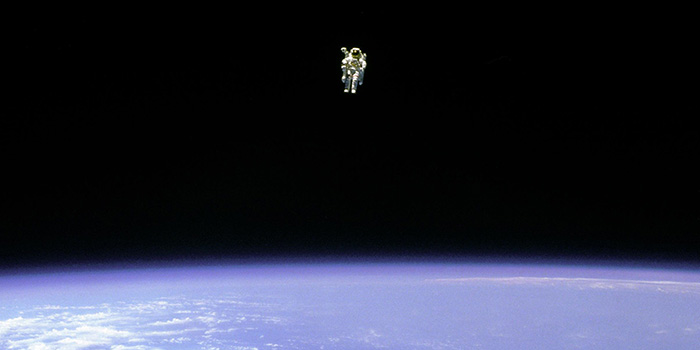
Valentina Tereshkova became the first woman in space in 1963. In 1965, Alexei Leonov carried out the first spacewalk.
On July 20, 1969, Neil Armstrong became the first human to walk on the Moon and was soon joined by Buzz Aldrin. Michael Collins remained in lunar orbit aboard the command module.
Uncrewed probes later achieved many additional firsts, including the first landings on other worlds, the first close-up images of the giant planets and the first human-made objects to enter interstellar space.
Winning New Rights
Political and social firsts often show that a long-standing barrier has begun to fall. They do not always mean that equality has been achieved, but they open a possibility that was previously denied.
In 1893, New Zealand became the first self-governing country to grant women the right to vote in national elections. In 1960, Sirimavo Bandaranaike of Sri Lanka became the first woman to lead a national government.
In the United States, Thurgood Marshall became the first African American justice of the Supreme Court in 1967. In 2008, Barack Obama became the first African American elected president of the country.
These milestones depended on collective movements. The individuals who broke through a barrier usually benefited from decades of activism, protest and legal change.
Creating New Artistic Forms
The arts also have their firsts, although they are sometimes difficult to define precisely.
In 1877, the phonograph made the lasting recording of voices and music possible. In 1895, the Lumière brothers organized a famous paid public film screening in Paris.
“The Story of the Kelly Gang,” produced in Australia in 1906, is generally regarded as the first feature-length narrative film. In 1927, “The Jazz Singer” popularized talking pictures through its synchronized dialogue sequences.
Television introduced regular broadcasts during the 1930s. After the Second World War, it gradually entered homes and transformed news, entertainment and advertising.
Pushing the Limits of the Human Body
Sport directly measures first-time human achievements. A symbolic record can change what athletes believe is possible.
In 1875, Matthew Webb became the first man to swim across the English Channel without artificial assistance. In 1926, Gertrude Ederle became the first woman to complete the feat.
The first modern Olympic Games were held in Athens in 1896. They included mainly male competitors, while women were not admitted to certain events until 1900.
In 1954, Roger Bannister became the first runner to complete the mile in under four minutes. In 1976, Nadia Comăneci received the first perfect score of 10 in Olympic gymnastics, even though the electronic scoreboards had not been designed to display it.
Quiz questions preview
-
Which computer beat a world champion for the first time in history?
Chess Master | Deep Blue | Stockfish | Cray Blitz -
A star of silent cinema, she became the first actress to earn more than a million dollars a year.
Clara Bow | Gloria Swanson | Mary Pickford | Lillian Gish -
This woman nicknamed "Lady Lindy" was the first woman to fly across the Atlantic Ocean.
Amelia Earhart | Linda Batten | Harriet Quimby | Amy Johnson -
Who won the first Nobel Prize in Literature in 1901?
Émile Zola | Sully Prudhomme | Paul Verlaine | Leconte de Lisle -
Who was the first woman to win a Nobel Peace Prize?
Harriet Beecher Stowe | Bertha von Suttner | Florence Kelley | Jane Addams

