
Natural Phenomena — Topic Guide
Natural phenomena result from the forces acting on Earth, within its atmosphere, oceans, and interior. Some unfold slowly over thousands of years, while others occur within seconds. They can transform landscapes, alter the climate, support life, or cause major disasters.
Weather Phenomena
Weather phenomena occur mainly in the troposphere, the lowest layer of the atmosphere. They are caused by variations in temperature, pressure, and humidity, as well as by the movement of air.
Wind forms when air moves from an area of high pressure towards an area of low pressure. Its direction and speed are also influenced by Earth’s rotation, the landscape, and temperature differences between regions.
Clouds form when water vapour cools and condenses around tiny particles in the atmosphere. Depending on their altitude, shape, and composition, they may indicate stable weather, precipitation, or thunderstorms.
The main forms of precipitation are:
-
Rain, which consists of liquid water droplets.
-
Snow, which is made up of ice crystals joined together as flakes.
-
Sleet, which consists of small ice pellets.
-
Freezing rain, which freezes when it comes into contact with cold surfaces.
-
Hail, which is produced by powerful updrafts inside thunderstorms.
Fog is a cloud that forms near the ground. It develops when moist air cools enough for water vapour to condense into tiny droplets. It can greatly reduce visibility.
Thunderstorms and Lightning
A thunderstorm usually develops inside a cloud called a cumulonimbus. This cloud can extend several kilometres into the atmosphere and contain violent air currents, liquid water, hail, and ice crystals.
Collisions between these particles cause electric charges to separate. When the difference in charge becomes too great, an electrical discharge occurs in the form of lightning. Lightning may connect two parts of the same cloud, two different clouds, or a cloud and the ground.
Thunder is caused by the extremely rapid heating of the air surrounding a lightning bolt. The air expands suddenly and produces a sound wave. Because light travels much faster than sound, lightning is seen before thunder is heard.
Some thunderstorms can also produce heavy rain, downbursts, flash floods, and tornadoes.
Tornadoes and Tropical Cyclones
A tornado is a rotating column of air that connects the base of a storm cloud to the ground. It often forms when warm, moist air meets colder, drier air, creating a highly unstable atmosphere.
Tornadoes are generally short-lived and affect a relatively limited area. However, they can produce extremely powerful winds capable of uprooting trees, overturning vehicles, and destroying buildings.
Tropical cyclones are much larger systems that develop over warm ocean waters. They are called hurricanes in the North Atlantic and northeastern Pacific, typhoons in the northwestern Pacific, and cyclones in several other regions.
A tropical cyclone has a central area called the eye, where conditions are often relatively calm. Surrounding the eye is a wall of clouds in which winds and rainfall are especially intense.
These storms can cause:
-
Destructive winds.
-
Torrential rain.
-
Flooding.
-
Landslides.
-
A storm surge, which causes the sea level to rise sharply near the coast.
Geological Phenomena
Earth’s surface is divided into large rocky plates that move slowly over the mantle. The movement of these tectonic plates is responsible for many geological phenomena, including earthquakes, volcanic activity, and mountain formation.
The plates may move apart, collide, or slide past one another. When they separate, magma may rise and form new crust. When they meet, one plate may sink beneath another in a subduction zone. Two continental masses may also collide and force up vast mountain ranges.
Tectonic movements are extremely slow on a human timescale, but their effects accumulate over millions of years.
Earthquakes
An earthquake occurs when energy stored in rocks is suddenly released. This rupture usually happens along a fault and produces seismic waves that shake the ground.
The focus is the point beneath the surface where the rupture begins. The epicentre is the point on Earth’s surface located directly above the focus.
Magnitude measures the amount of energy released by an earthquake. Intensity instead describes the effects felt and the damage observed in a particular place. The same earthquake can therefore have different intensities depending on distance, soil conditions, and the strength of buildings.
The main shock is often followed by aftershocks. These may occur a few minutes, several days, or even months after the initial earthquake.
Volcanoes
A volcano allows magma, gases, and fragments of rock to rise to the surface. When magma emerges from the volcano, it is called lava.
Effusive eruptions generally produce relatively fluid lava flows. Explosive eruptions project ash, rock fragments, and gases over great distances. Their violence depends in part on the composition and viscosity of the magma.
The main volcanic hazards include:
-
Lava flows.
-
Falling ash.
-
Pyroclastic flows made up of burning gases and volcanic material.
-
Volcanic mudflows called lahars.
-
Emissions of toxic gases.
-
Landslides or the collapse of part of the volcano.
Volcanoes also have a constructive role. They can form islands, enrich soils with minerals, and create new landforms.
Tsunamis
A tsunami is a series of waves caused by the sudden displacement of a large volume of water. The most common cause is an underwater earthquake, but a volcanic eruption, landslide, or impact from a celestial object can also produce one.
In the open ocean, tsunami waves can travel very quickly while remaining relatively low. As they approach the coast, they slow down, move closer together, and grow in height.
The danger does not necessarily come from a single wave. Several waves may reach the shore at intervals of a few minutes or several dozen minutes, and the first is not always the strongest.
Erosion and Mass Movements
Erosion gradually wears away and transports rocks and soil. It may be caused by water, wind, ice, temperature changes, or the activity of living organisms.
Rivers carve valleys, waves reshape coastlines, and glaciers form U-shaped valleys. In desert regions, wind transports sand and creates dunes.
Mass movements occur when a mass of rock, soil, or snow moves downhill under the force of gravity. They include:
-
Landslides.
-
Rockfalls.
-
Mudflows.
-
Ground subsidence.
-
Avalanches.
Heavy rain, an earthquake, erosion, or rapid snowmelt can make a slope unstable.
Oceanic Phenomena
Tides are the periodic rise and fall of sea level. They are caused mainly by the Moon’s gravitational pull, combined with the influence of the Sun.
When Earth, the Moon, and the Sun are aligned, their forces combine and produce tides with a greater range. When the Moon and the Sun form a right angle relative to Earth, the tidal range is smaller.
Ocean currents transport enormous quantities of water and heat. Surface currents are driven mainly by winds, while deep currents depend on differences in temperature and salinity.
Ordinary waves are produced mainly by wind. Their height depends on wind speed, how long it blows, and the distance over which it travels.
Cold-Related Phenomena
In mountainous or polar regions, snow may accumulate over long periods. When it becomes compressed and gradually turns into ice, it can form a glacier.
A glacier flows slowly under its own weight. It carries rocks, carves the landscape, and deposits material called moraine.
An avalanche occurs when a mass of snow breaks loose and moves rapidly down a slope. It may be triggered by unstable accumulation, a change in temperature, fresh snowfall, or a vibration.
Permafrost is ground that remains frozen for at least two consecutive years. When it thaws, the ground may sink and become unstable.
Optical Phenomena in the Atmosphere
A rainbow forms when sunlight passes through water droplets. The light is refracted, reflected inside the droplets, and then separated into different colours.
Halos appear when light passes through ice crystals in high-altitude clouds. They often form a circle around the Sun or the Moon.
Mirages are caused by the bending of light through layers of air at different temperatures. They can make an object appear displaced, distorted, or reflected on a surface.
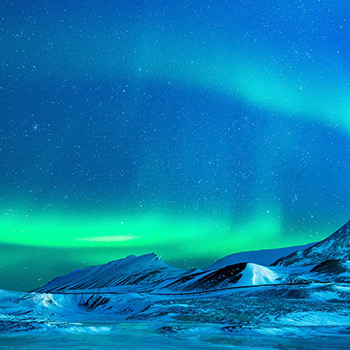
Auroras occur when charged particles from the Sun interact with gases in the upper atmosphere. They are called the aurora borealis in the Northern Hemisphere and the aurora australis in the Southern Hemisphere.
Astronomical Phenomena Visible from Earth
A solar eclipse occurs when the Moon passes between Earth and the Sun. It may be total, partial, or annular, depending on the alignment and distances between the three bodies.
A lunar eclipse occurs when Earth moves between the Sun and the Moon. The Moon then passes through Earth’s shadow and may take on a reddish colour.
A meteor shower occurs when Earth passes through a region containing debris left behind by a comet or, less commonly, an asteroid. As these fragments enter the atmosphere, they heat up and produce streaks of light.
Comets are bodies made mainly of ice, dust, and rock. As they approach the Sun, heat releases gases and dust that form a glowing coma and one or more tails.
Quiz questions preview
-
What is lightning?
An electric discharge | A volcanic eruption | A type of cloud | An ocean current -
Severe snowstorm with strong winds and reduced visibility.
Blizzard | Avalanche | Depression | Snowfall -
What is the phenomenon of the gradual disappearance of a species called?
Extinction | Migration | Adaptation | Evolution -
What type of musty-looking cloud forms at altitudes of around 2,000 to 6,000 meters?
Nimbostratus | Altocumulus | Cumulonimbus | Cirrus -
What is the rotation period of the Earth?
24 hours | 12 p.m. | 6 p.m. | 36 hours

