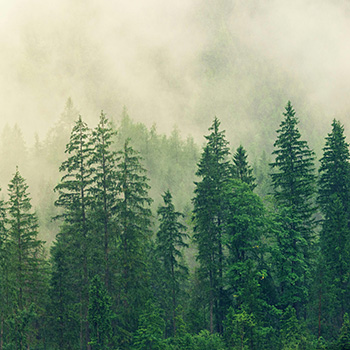

Taiga — Topic Guide
The taiga is an immense coniferous forest stretching across the northern regions of North America, Europe, and Asia. Located between the tundra and temperate forests, it is one of the largest natural environments on Earth and plays a major role in the global climate.
Where Is the Taiga Located?
The taiga forms a vast, nearly continuous belt around the Northern Hemisphere. It covers much of Canada, Alaska, Russia, Scandinavia, and the northern parts of some Asian regions. In Russia, it extends for thousands of kilometres across Siberia.
It is generally located south of the tundra, where conditions allow trees to grow but winters remain too long and cold to support a wide variety of plant life. Farther south, it gradually gives way to mixed forests and temperate forests.
The taiga is also known as the boreal forest. The word “boreal” means “northern.” In Canada, the term “boreal forest” is very common, while “taiga” sometimes refers more specifically to the northernmost parts of this forest.
A Cold and Contrasting Climate
The taiga climate is marked by long, cold winters and short summers. In some regions, winter temperatures can fall extremely low, especially in Siberia and northern Canada.
The main characteristics of the climate include:
-
Winters often last from five to seven months.
-
Summers are short, but they can be relatively warm.
-
Temperature differences between winter and summer are significant.
-
Precipitation is moderate and often falls as snow.
-
Snow may cover the ground for much of the year.
Although precipitation is not especially heavy, evaporation remains low because of the cold. Water can therefore accumulate in the soil and form lakes, marshes, peatlands, and wetlands.
Daylight varies greatly with the seasons. Winter days are very short. During summer, daylight may last almost all day in regions near the Arctic Circle.
Vast Coniferous Forests
The taiga is dominated by conifers, trees that are well adapted to cold conditions. Their shape, needles, and bark allow them to withstand low temperatures, the weight of snow, and a limited growing season.
The most common species include:
-
Spruce trees.
-
Fir trees.
-
Pine trees.
-
Larch trees.
Most conifers keep their needles during winter. This allows them to resume photosynthesis quickly when temperatures rise. The larch is an exception because it loses its needles in autumn.
The conical shape of many trees helps snow slide off. Their flexible branches bend under its weight without breaking easily. Their narrow needles also reduce water loss and resist freezing better than large, flat leaves.
The dark colour of the needles allows them to absorb more solar heat. This adaptation is useful in an environment where temperatures remain low for much of the year.
Relatively Limited Plant Diversity
The taiga contains fewer plant species than temperate or tropical forests. Cold temperatures, a short growing season, and nutrient-poor soils limit diversity.
Beneath the trees, light levels are often low. The ground may be covered with mosses, lichens, ferns, and small shrubs. Blueberries, lingonberries, and other small berry-producing plants grow in many regions.
Deciduous trees are also present, especially in areas disturbed by wildfires or logging. Birch, poplar, and aspen can quickly colonize open spaces.
These trees grow faster than most conifers, but they are often gradually replaced by them as the forest matures.
Taiga Soils
Taiga soils are generally thin, acidic, and poor in nutrients. Fallen needles decompose slowly because of the cold. They form an acidic layer that limits the growth of many plants.
In many regions, the soil is poorly drained. Water accumulates because the land is flat, evaporation is low, or the subsoil is frozen. Peatlands may then develop.
Peatlands are wetlands where plant matter decomposes very slowly. They accumulate large amounts of carbon over thousands of years.
Permafrost may be present in the northern taiga. However, it is not as continuous as it is in the tundra. Its seasonal thaw affects tree growth, water movement, and ground stability.
Animals of the Taiga
The taiga is home to wildlife adapted to severe winters. Many animals have thick fur, a layer of fat, or large feet that help them move through snow.
The main mammals include:
-
Moose.
-
Caribou.
-
Brown bears and black bears.
-
Wolves.
-
Lynx.
-
Foxes.
-
Beavers.
-
Snowshoe hares.
-
Squirrels.
-
Martens.
Moose feed on leaves, twigs, and aquatic plants. Their long legs allow them to travel through marshes and deep snow.
Lynx hunt snowshoe hares, among other prey. The populations of these two species sometimes follow cycles related to food availability and predator pressure.
Beavers transform their environment by building dams. These dams create ponds and wetlands that benefit many other species.
Birds and Insects
The taiga is home to many birds, especially during summer. Several migratory species arrive from the south to nest and take advantage of the seasonal abundance of food.
Birds found there include owls, eagles, hawks, woodpeckers, ravens, chickadees, grouse, and various species of ducks.
Some birds remain throughout the year. They survive thanks to dense plumage, fat reserves, and the ability to find seeds or small prey beneath the snow.
Insects become extremely numerous during summer. Mosquitoes, flies, and other insects reproduce rapidly in wetlands. They provide food for birds, fish, and many small animals.
Adaptations to Winter
Animals in the taiga use different strategies to survive the cold.
Some migrate to warmer regions. Others hibernate or greatly reduce their activity. Several species change their diet with the seasons.
The snowshoe hare changes colour. Its brown coat turns white in winter, helping it blend into the snow. The ptarmigan has a similar adaptation.
Squirrels store food before winter. Bears slow their metabolism and spend several months in a den.
Large herbivores search for branches, bark, and lichens when plants on the ground become inaccessible. Predators must travel greater distances to find prey.
Wildfires
Wildfires are part of the taiga’s natural cycle. They sometimes destroy vast areas, but they also contribute to forest renewal.
Fire releases nutrients trapped in dead vegetation. It creates open spaces where new plants can grow. Some tree species even produce cones that open more easily when exposed to heat.
After a fire, grasses, shrubs, and fast-growing trees often appear first. Conifers then gradually reclaim the area.
However, fires that are too frequent or intense can prevent the forest from regenerating normally. They can also destroy part of the organic matter stored in the soil.
Peoples of the Taiga
The taiga has been inhabited for thousands of years. Many Indigenous peoples have developed ways of life adapted to the forest, rivers, animals, and seasons.
Hunting, fishing, gathering, and trapping have long provided most essential resources. Caribou, moose, fish, and fur-bearing animals played an important role in food, clothing, and trade.
Travel often took place by canoe, sled, or on foot. Knowledge of the land made it possible to locate migration routes, fishing areas, and useful plants.
Today, taiga communities often combine traditional activities with modern life. Many also seek to protect their territories from the effects of industrial development.
Resource Development
The taiga contains major natural resources. Timber, minerals, oil, natural gas, and hydroelectric power are developed in many regions.
The forestry industry mainly uses conifers to produce construction lumber, paper, and various materials. When logging is carefully planned, the forest can regenerate. However, overly intensive harvesting can fragment habitats and impoverish soils.
Mines, roads, dams, and pipelines also alter the landscape. They can disrupt animal migrations, pollute waterways, or open previously isolated regions to development.
The taiga is immense, but its slow growth makes it vulnerable. A damaged area may take several decades to return to its original state.
The Taiga’s Role in the Climate
The taiga plays an important role in the carbon cycle. Trees absorb carbon dioxide as they grow and store it in their wood, roots, and surrounding soils.
Peatlands and cold soils also store large amounts of carbon. When these environments burn or warm, some of this carbon may be released into the atmosphere.
The dark colour of forests absorbs a large amount of solar energy. Snow, by contrast, reflects sunlight. The presence or absence of trees therefore influences local temperatures and energy exchanges.
The Taiga and Climate Change
Warming is already transforming the taiga. Temperatures are rising, the growing season is becoming longer, and some species are moving northward.
In many regions, wildfires are becoming more frequent or more intense. Periods of drought can weaken trees and make it easier for fires to spread.
Insect pests also benefit from milder winters. Some species survive in greater numbers and attack forests that were once protected by cold temperatures.
Thawing permafrost changes soils and waterways. It can cause the ground to collapse, damage infrastructure, and release greenhouse gases.
The taiga may expand northward in some regions, replacing parts of the tundra. However, it may retreat in the south if temperatures become too high or if droughts and wildfires prevent normal regeneration.
Quiz questions preview
-
What proportion of the Earth's land surface is covered by the taiga?
15% | 10% | 20% | 5% -
Why are the northern lights more frequent in the taiga?
Due to glaciers | Due to conifers | Due to the cold | Due to latitude -
How did Soviet-era policies impact the indigenous peoples of the Siberian taiga?
Territorial expansion | Increased autonomy | Return to traditions | Forced sedentarization -
What is the main role of lichens in the taiga?
Improve drainage | Warm the soil | Fix nitrogen | Produce pollen -
What element contributes to the acidity of the taiga's soil?
Presence of peat | Mineral salts | Rapid erosion | Conifer needles

