Tundra — Topic Guide
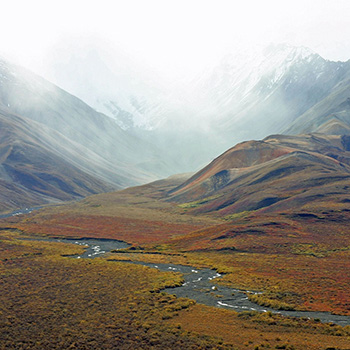
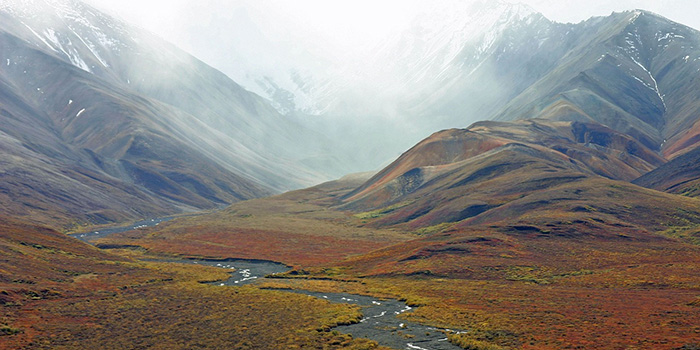
The tundra is a vast, cold environment where trees can barely grow. Found mainly around the Arctic Ocean and in high mountain regions, it is home to plants, animals, and human populations remarkably adapted to freezing temperatures, strong winds, short summers, and deeply frozen ground.
Where Is the Tundra Located?
The tundra forms a broad belt around the polar regions. It covers northern Canada, Alaska, Greenland, Iceland, Scandinavia, and Siberia. In many of these regions, it lies between the taiga, which is dominated by coniferous forests, and the areas of permanent ice farther north.
Two main types of tundra are generally recognized:
-
Arctic tundra is found at high latitudes in the Northern Hemisphere. It is characterized by long winters, very short summers, and the widespread presence of permafrost.
-
Alpine tundra develops in mountainous regions above the elevation where trees can survive. It exists in many mountain ranges, even far from the polar regions.
A Cold, Dry, and Windy Climate
The tundra climate is characterized by low temperatures during most of the year. Winters are long, dark, and windy, while summers last only a few weeks or months.
Although the tundra is often covered with snow, it receives little precipitation. Some Arctic regions are as dry as deserts. However, low evaporation and frozen ground allow water to remain near the surface during summer. Ponds, marshes, and waterlogged areas then appear across the landscape.
In the northernmost regions, the Sun does not rise for part of the winter. By contrast, it may remain visible day and night for several weeks during summer. This cycle strongly influences the lives of plants and animals.
Permafrost
One of the most important features of the Arctic tundra is permafrost, which is ground that remains frozen for at least two consecutive years. In some regions, it can extend hundreds of metres below the surface.
Only the upper layer thaws during summer. This active layer allows plant roots, insects, and small soil organisms to develop temporarily. Because water cannot penetrate deeply into the frozen ground, it remains near the surface and creates many wetlands.
Permafrost also plays an important role in ground stability. When it thaws, the soil can sink, crack, or form depressions. Northern infrastructure must therefore be designed to withstand these changes.
Low and Resilient Vegetation
Trees are almost entirely absent from the tundra. Cold temperatures, strong winds, the shallow depth of thawed soil, and the short growing season prevent their roots from developing normally. Vegetation therefore remains low to the ground, which helps it retain heat and resist strong winds.
The main plants found in the tundra include:
-
Mosses, which cover wet ground and can survive long periods of freezing.
-
Lichens, which are formed through a partnership between a fungus and an alga or cyanobacterium.
-
Sedges and grasses, which are well adapted to waterlogged soil.
-
Small shrubs, such as dwarf birch and certain species of willow.
-
Flowering plants, which complete their growth and reproduction rapidly during the short summer.
Many plants grow in dense cushion-like shapes. This form reduces their exposure to the wind and creates a slightly warmer microclimate near the ground. Some plants also have hairy or dark-coloured leaves that retain heat more effectively.
Wildlife Adapted to Extreme Conditions
The tundra is home to animals capable of surviving the cold and quickly taking advantage of the abundance of summer. Many have thick fur, a layer of fat, or seasonal colouring.
Some of the best-known tundra animals include:
-
The caribou, called the reindeer in Eurasia, which migrates over long distances between its winter and summer ranges.
-
The muskox, which is protected by a dense coat and long outer hair.
-
The Arctic fox, whose fur may change colour with the seasons.
-
The Arctic hare, which has large feet and thick fur.
-
The lemming, a small rodent that plays an important role in the food chain.
-
The snowy owl, which mainly hunts small mammals.
-
The Arctic wolf, which is adapted to cold and largely treeless regions.
-
The polar bear, which mainly lives on sea ice and along coastlines but may also travel through tundra regions.
Insects are extremely abundant during summer. Mosquitoes and flies reproduce in areas of standing water. They become an essential source of food for many birds.
Great Migrations
The tundra experiences an explosion of life during the warmer season. Millions of migratory birds arrive to feed, nest, and raise their young. Geese, ducks, plovers, sandpipers, and terns take advantage of the abundance of insects and the long summer days.
Caribou also travel very long distances. Their migrations allow them to reach seasonal grazing grounds and calving areas. These movements are essential to their survival, but they make caribou vulnerable to roads, mining activities, and other human-made obstacles.
When winter returns, many animals leave the tundra. Others remain, reduce their activity, or dig shelters beneath the snow, where temperatures are more stable than in the open air.
Food Chains
Tundra vegetation feeds a wide variety of herbivores. Lichens, mosses, grasses, and shrubs provide food for caribou, muskoxen, hares, and lemmings.
These small herbivores are then hunted by foxes, owls, hawks, and wolves. Predator populations often vary according to the abundance of their prey. When lemming populations increase, predators have more food and can raise more young.
The decomposition of organic matter is slow because of the cold. Plant and animal remains therefore accumulate in the soil. Large amounts of carbon remain trapped in the permafrost.
The Peoples of the Tundra
The tundra has been inhabited for thousands of years. The Inuit, Sami, Nenets, Chukchi, and other northern peoples have developed cultures closely connected to the climate, animals, and seasons.
Hunting, fishing, and reindeer herding have long played a central role in their ways of life. Travel often followed animal migrations, the formation of sea ice, and the availability of resources. Traditional clothing, shelters, and means of transportation were designed to preserve heat and withstand local conditions.
Today, many northern communities combine traditional practices with modern technology. They use contemporary equipment while maintaining knowledge related to ice, weather, animals, and the land.
Natural Resources and Human Activities
The tundra contains significant natural resources. Oil, natural gas, iron, nickel, copper, gold, and other minerals are extracted in several regions. These activities can create jobs and support regional economies, but they also affect landscapes and ecosystems.
The construction of roads, mines, ports, and pipelines fragments habitats. Tundra soil recovers very slowly because vegetation grows at a limited rate and the growing season is short. A vehicle track can therefore remain visible for many years.
The Tundra and Climate Change
Arctic regions are warming faster than the global average. This transformation is already changing permafrost, vegetation, ice, waterways, and animal movements.
Thawing permafrost can release carbon dioxide and methane, two greenhouse gases. These emissions may further intensify warming. Unstable ground can also damage buildings, roads, and other infrastructure.
In some regions, the tree line is gradually moving northward or to higher elevations. Shrubs are becoming taller and more numerous, changing local habitats. Species from warmer environments may also compete with species adapted to the cold.
These changes also affect human populations. Ice roads are becoming less reliable, travel is becoming more dangerous, and some coastal areas are experiencing increased erosion. Traditional knowledge remains essential for observing and understanding these transformations.
Quiz questions preview
-
Which of the Arctic tundra's major predators hunts most seals?
Lynx | Arctic wolf | Polar bear | Sea lion -
Which biome forms the forest limit of the tundra in the northern hemisphere?
Steppe | Savanna | Taiga | Grassland -
What light phenomenon is often visible in the Arctic tundra?
Lunar halos | Zodiacal lights | Nocturnal rainbows | Aurora borealis -
What's the main source of food for tundra herbivores?
Lichens and mosses | Edible roots | Dry grasses | Aquatic algae -
How does Arctic tundra differ from Alpine tundra?
By the higher altitude of the alpine tundra | By permanent snow cover | By its more varied fauna | By the presence of shrubs in the Arctic

