Earth’s Timeline: Geological Eras — Topic Guide
Earth’s history extends over approximately 4.54 billion years. To organize this almost unimaginable span of time, geologists developed a scale based on rocks, fossils, and major planetary transformations. It traces the formation of continents, the evolution of life, and the crises that profoundly reshaped living species.
The Geological Time Scale
Geological time is divided into hierarchical units. Eons are the longest divisions. They are divided into eras, which are then divided into periods, epochs, and ages.
The boundaries between these units generally correspond to major changes observed in rock layers, such as the appearance or disappearance of certain species, climate shifts, continental movements, or mass extinctions. The oldest dates remain approximate and may be revised as dating methods improve.
The Precambrian covers most of Earth’s history, from the planet’s formation until approximately 539 million years ago. It includes the Hadean, Archean, and Proterozoic eons. The Phanerozoic, which followed, includes the three major eras most commonly taught: the Paleozoic, Mesozoic, and Cenozoic.
The Hadean: The Formation of Earth
The Hadean began with the formation of Earth approximately 4.54 billion years ago and ended around 4 billion years ago. Its name refers to Hades, the underworld of Greek mythology, because the young planet was once imagined as an entirely infernal environment.
Earth formed through the accumulation of dust and rocky material surrounding the young Sun. Frequent collisions released enormous amounts of heat. The decay of radioactive elements and the compression of materials also helped keep the planet’s interior molten.
Heavier elements, such as iron and nickel, gradually sank towards the centre and formed the core. Lighter materials formed the mantle and the first terrestrial crust.
A major collision between the early Earth and a celestial body the size of a small planet may have thrown material into orbit. The accumulation of this debris would eventually have formed the Moon. Earth’s surface then cooled gradually, allowing a more stable crust and probably the first oceans to develop.
No certain form of life is known from this time. Hadean rocks are extremely rare because almost all of them have been transformed or recycled by geological activity.
The Archean: The First Forms of Life
The Archean extended from approximately 4 to 2.5 billion years ago. Earth’s crust became more stable, and the first continental masses began to form. These early continents were much smaller than those of today.
The atmosphere contained very little free oxygen. It consisted mainly of nitrogen, water vapour, carbon dioxide, and other gases released by volcanic activity. Oceans already covered a large part of the surface.
The earliest generally accepted evidence of life appeared during the Archean. These organisms were simple single-celled life forms comparable to modern bacteria and archaea. Some lived around hydrothermal vents, while others developed in shallow waters.
Microbial communities built rocky structures known as stromatolites. Certain cyanobacteria carried out photosynthesis and released oxygen. At first, this oxygen reacted with iron dissolved in the oceans, producing large deposits of banded iron formations.
The Proterozoic: Oxygen and Complex Life
The Proterozoic began 2.5 billion years ago and ended around 539 million years ago. It was marked by a major transformation of the atmosphere and by the appearance of increasingly complex organisms.
Between approximately 2.4 and 2 billion years ago, oxygen levels rose sharply during the Great Oxidation Event. This change was toxic to many organisms adapted to an oxygen-free environment, but it eventually allowed the development of life forms that used more efficient forms of respiration.
Eukaryotic cells appeared during the Proterozoic. Unlike bacteria, they possessed a nucleus and specialized internal structures. They would eventually give rise to animals, plants, fungi, and many single-celled organisms.
The Proterozoic was also characterized by:
-
The formation and breakup of several supercontinents.
-
The appearance of sexual reproduction.
-
The development of the first multicellular organisms.
-
Long glacial periods during which ice may have covered much of the planet.
-
The appearance, during the Ediacaran Period, of soft-bodied marine organisms, many of which resembled no living species.
By the end of the Proterozoic, the oceans already contained diverse animal communities, although most organisms did not yet possess shells, exoskeletons, or mineralized skeletons.
The Paleozoic: The Conquest of the Continents
The Paleozoic, meaning “ancient life,” extended from approximately 539 to 252 million years ago. It began with a spectacular diversification of marine animals and ended with the largest known mass extinction. It includes six principal periods.
The Cambrian
The Cambrian was marked by the “Cambrian explosion,” a relatively rapid diversification of animal forms visible in the fossil record. Many organisms developed shells, exoskeletons, or skeletons.
The seas contained trilobites, sponges, worms, mollusks, and unusual marine predators. The first known vertebrates were small aquatic animals without jaws. Life remained almost entirely confined to the oceans.
The Ordovician
During the Ordovician, marine invertebrates diversified considerably. Corals, brachiopods, mollusks, and echinoderms occupied shallow seas. The first simple plants probably began colonizing moist terrestrial environments.
A major glaciation caused sea levels to fall at the end of the period. It contributed to the first of the five great mass extinctions of the Phanerozoic.
The Silurian
The climate warmed and sea levels rose again. Jawed fish diversified, while extensive reefs formed in tropical seas.
Small vascular plants developed on land. Arthropods, including ancestors of arachnids and millipedes, also began occupying the continents.
The Devonian
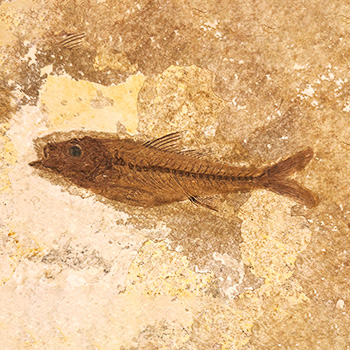
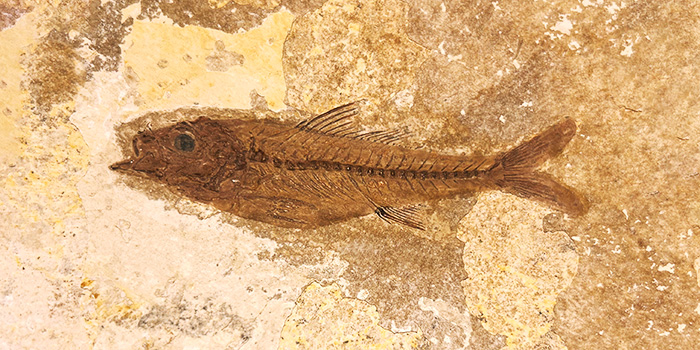
The Devonian is often called the “Age of Fishes.” Sharks, armoured fish, and bony fish multiplied in oceans and freshwater environments.
The first true forests appeared. Their roots transformed soils and altered the carbon cycle. Certain lobe-finned fish gave rise to the first tetrapods, vertebrates capable of moving through very shallow water and eventually onto land.
The Carboniferous
Vast swamp forests covered equatorial regions. The burial of their vegetation eventually produced much of the coal mined today.
High oxygen concentrations favoured large arthropods, including insects of impressive size. Amphibians were numerous, while the first reptiles and other amniotes appeared. Their eggs were better adapted to land, making them less dependent on water for reproduction.
The Permian
The continents joined together to form Pangaea, surrounded by an immense ocean. The interior of the supercontinent became generally dry, favouring reptiles and synapsids, the group that would later include mammals.
The Permian ended approximately 252 million years ago with the largest known mass extinction. Enormous volcanic activity, combined with major climatic and oceanic changes, caused the disappearance of most marine species and a large proportion of terrestrial vertebrates.
The Mesozoic: The Age of Reptiles
The Mesozoic, meaning “middle life,” extended from 252 to 66 million years ago. It includes the Triassic, Jurassic, and Cretaceous periods. Dinosaurs dominated terrestrial ecosystems, while marine and flying reptiles occupied the oceans and skies.
The Triassic
Life recovered slowly after the Permian extinction. The first dinosaurs, pterosaurs, and mammals appeared. Pangaea still existed, but fractures were beginning to indicate its future breakup.
Another mass extinction occurred at the end of the Triassic. It eliminated several competing groups and allowed dinosaurs to become dominant.
The Jurassic
The breakup of Pangaea continued, and the Atlantic Ocean began to open. The climate was generally warm and humid. Conifers, ferns, and cycads dominated the vegetation.
Large herbivorous dinosaurs roamed the continents alongside powerful predators. The first birds evolved from feathered dinosaurs. Mammals generally remained small.
The Cretaceous
The continents gradually moved towards a configuration more similar to that of today. Flowering plants appeared and diversified, transforming terrestrial ecosystems and the relationships between plants and insects.
The Cretaceous ended 66 million years ago following the impact of a large asteroid in the region of the present-day Yucatán Peninsula. The resulting atmospheric and climatic disturbances contributed to the extinction of non-avian dinosaurs, ammonites, and many other species.
The Cenozoic: Mammals and Humanity
The Cenozoic, meaning “recent life,” began 66 million years ago and continues today. It is divided into three periods: the Paleogene, Neogene, and Quaternary.
The Paleogene
After the extinction at the end of the Cretaceous, mammals and birds occupied the environments left vacant. Primates, bats, whales, early elephants, and several groups of modern mammals appeared or diversified.
The climate, which was very warm at the beginning of the period, gradually cooled. A permanent ice sheet began to form in Antarctica towards the end of the Paleogene.
The Neogene
Grasslands expanded across many regions, favouring horses, antelopes, and other mammals adapted to running and grazing. The continents continued to move, and major mountain ranges continued to rise.
The first hominins appeared in Africa. By the end of the Neogene, some already possessed adaptations for walking on two legs.
The Quaternary
The Quaternary began approximately 2.58 million years ago. The Pleistocene was marked by a succession of glacial and interglacial periods. Mammoths, mastodons, woolly rhinoceroses, and other large animals lived in various regions.
The human genus diversified, and Homo sapiens appeared in Africa. It later spread across most continents.
The Holocene began approximately 11,700 years ago, after the last major glaciation. Its relatively stable climate accompanied the development of agriculture, cities, and civilizations. The term “Anthropocene” is often used to describe humanity’s present influence on the planet, but it is not an officially recognized epoch of the geological time scale.
Quiz questions preview
-
What are the subdivisions of a geological period called?
Epoch | Cycle | Zone | Age -
Which epoch of the Quaternary, starting about 11,700 years ago, corresponds to the rise of human civilizations?
Neogene | Holocene | Eocene | Pleistocene -
To which major temporal unit does a geological era belong?
An eon | A period | An epoch | An age -
Which of these periods is the oldest?
Cambrian | Miocene | Paleogene | Triassic -
Which of these periods is the oldest?
Cretaceous | Quaternary | Carboniferous | Holocene

