Scandals in Sports — Topic Guide
Sport is based on the idea of fair competition, governed by common rules and judged according to performance. When an athlete, team, federation or official circumvents those rules, the scandal often extends far beyond the result of a match. It affects public trust, institutional integrity and sometimes the safety of the participants themselves.
Doping and the Pursuit of Performance
Doping is one of the best-known forms of cheating in sport. It involves the use of prohibited substances or methods to improve strength, endurance, recovery or concentration.
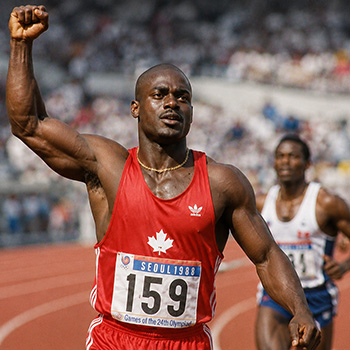
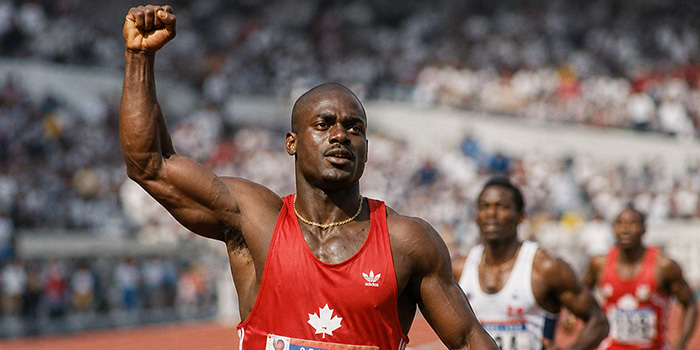
The case of Ben Johnson remains one of the most memorable. At the 1988 Seoul Olympic Games, the Canadian sprinter won the 100 metres in record time before testing positive for stanozolol. His gold medal was withdrawn, and Carl Lewis was declared the winner. The affair became a worldwide symbol of doping in elite sport.
Cycling was also deeply shaken by the Lance Armstrong scandal. The American had won seven consecutive Tours de France after surviving cancer. Long presented as a model of courage, he eventually admitted to using performance-enhancing drugs and taking part in an organized doping system. His victories were stripped from him, and his public image collapsed.
Doping may be an individual act, but it can also become institutional. In some countries, programs have been organized or concealed by coaches, laboratories and officials. The Russian doping scandal notably revealed sample manipulation and mechanisms designed to protect athletes. Sanctions affected entire federations and restricted participation under the national flag.
Pressure to produce results, earn contracts and satisfy sponsors can create an environment in which cheating becomes almost normal.
Match-Fixing and Sports Betting
A fixed match loses its sporting value because its result, or certain events within it, have been manipulated in advance. Players, referees, coaches or officials may be bribed to favour one team, produce a specific score difference or influence a particular wager.
The 1919 Black Sox scandal is one of the most famous historical cases. Eight Chicago White Sox players were accused of accepting money to deliberately lose the World Series against the Cincinnati Reds. Although they were acquitted in criminal court, they were banned from professional baseball for life.
In Italian football, the Calciopoli affair broke in 2006. Club officials were accused of influencing the appointment of referees. Juventus was relegated to the second division and stripped of titles, while other clubs received penalties. The scandal demonstrated that it is not always necessary to pay a player directly in order to distort a competition: controlling referees or match conditions may be enough.
Referees themselves may also become involved. In the NBA, Tim Donaghy pleaded guilty after betting on games, including some that he officiated. The conflict of interest alone destroyed confidence in the fairness of the competition.
The growth of online betting has increased the risks. It is no longer necessary to manipulate the final result. A card, foul, number of points or highly specific event can become the subject of a wager. Such manipulation may be more difficult to detect.
Corrupt Officials and the Awarding of Events
Sporting scandals do not arise only on the field. Major federations control billions of dollars, award prestigious competitions and negotiate broadcasting, sponsorship and construction contracts. This power can encourage conflicts of interest and corruption.
FIFA went through a major crisis when several officials were accused of fraud, money laundering and illegal payments. Investigations exposed practices involving the sale of commercial rights and the awarding of competitions. The affair led to arrests, suspensions and the downfall of several senior figures.
The Olympic movement has also faced controversy. The awarding of the 2002 Winter Games to Salt Lake City caused a scandal after gifts, benefits and payments provided to certain members of the International Olympic Committee were revealed. Several members were sanctioned, and the selection rules were reformed.
These cases raise an essential question: does a city or country receive an event because its project is the best, or because its representatives successfully influenced the decision-makers? When the process appears opaque, the entire competition loses credibility before it even begins.
Abuse, Violence and Institutional Silence
Some of the most serious scandals concern not cheating, but the protection of individuals. Athletes, often young, may depend entirely on their coaches, doctors or officials. This power imbalance creates a risk of abuse, especially when institutions are primarily concerned with protecting their reputation.
The Larry Nassar case shook American gymnastics. A former national team doctor, Nassar sexually assaulted numerous athletes over many years. Testimony also revealed the failures of several organizations that had received complaints or warnings without responding effectively.
The Penn State scandal likewise demonstrated the consequences of institutional silence. Officials were accused of failing to respond properly to information concerning assaults committed by former assistant coach Jerry Sandusky. The affair extended far beyond college football. It raised the question of whether protecting the reputation of a sports program had been given priority over protecting victims.
In other sports, investigations have exposed violence committed in environments where absolute obedience was encouraged.
Technical Cheating and Espionage
Technological advances have created new forms of cheating. Teams have access to data, electronic communications, video recordings and monitoring systems that may be used legally or misused.
In baseball, the Houston Astros were sanctioned for using an electronic system to steal opposing catchers’ signs during their championship-winning 2017 season. The stolen signs allowed hitters to anticipate the type of pitch. Executives were suspended or dismissed, but the World Series title was not withdrawn, which fuelled further controversy.
Formula One experienced an espionage scandal in 2007 involving Ferrari and McLaren. Confidential Ferrari technical information ended up in McLaren’s possession. The British team was excluded from the Constructors’ Championship and received an exceptional fine.
In other sports, technical cheating may involve illegal equipment, concealed motors, prohibited communications or manipulated software.
Financial Scandals and Exploitation
Professional sport generates enormous revenue, but that wealth is not always managed transparently. Officials have been accused of embezzlement, tax fraud, fictitious contracts or the personal use of an organization’s funds.
Stadium construction may lead to cost overruns, forced removals, questionable contracts or facilities that have little use after a competition. Sporting prestige can then be used to justify spending that benefits certain groups more than the general population.
In American college sport, the exploitation of athletes was debated for many years. Schools, coaches and broadcasters earned vast sums, while players could not freely profit from their own names or images. Recent changes have reduced some of this imbalance while creating new questions about money and recruitment.
Consequences for Athletes and the Public
Sanctions can take several forms: disqualification, loss of medals, cancellation of records, suspension, relegation, fines or lifetime bans. Teams may also lose titles or be excluded from competitions.
The consequences are not always applied equally. Some athletes become scapegoats while officials remain in their positions. In other cases, a federation protects its stars because they generate revenue. Investigations may also take so long that a medal is reassigned years after the event, long after the ceremony and media attention have passed.
For the public, a scandal changes the way performances are viewed. An extraordinary record may inspire admiration, but also suspicion. A victory may seem less legitimate when the team, referee or organization has already been involved in wrongdoing.
The Media, Whistleblowers and Investigations
Scandals rarely reveal themselves. They are often exposed by journalists, athletes, employees, doctors, police officers or whistleblowers. Their work can uncover systems that sporting organizations would prefer to keep secret.
The media nevertheless play an ambiguous role. They may conduct important investigations, but they may also turn an unproven allegation into an immediate public conviction. In the sporting world, where reputations can change quickly, a poorly verified story may cause lasting damage.
Institutions therefore need independent procedures, reporting mechanisms and protection for witnesses. A federation cannot always be trusted to judge its own conduct, especially when its revenue or prestige is at risk.
Quiz questions preview
-
This footballer used his hand to score a goal in the quarter-finals of the 1986 World Cup.
Pelé | Lionel Messi | Diego Maradona | Ronaldo -
Winner of the 200-meter race at the 1968 Mexico City Olympics, he stood on the podium raising his fist wearing a black glove.
Don Quarrie | Tommie Smith | Peter Norman | Valeriy Borzov -
His death during the 1967 Tour de France was the first doping scandal in the cycling world.
Jean Graczyk | Leandro Faggin | Tom Simpson | Michael Gambrill -
Which former Eastern European country had an organized doping system, supported and propelled by the state?
Hungary | Czechoslovakia | East Germany | Poland -
Which boxer was fined for biting his opponent's ear during a world championship bout in 1997?
Evander Holyfield | Floyd Mayweather Jr. | Muhammad Ali | Mike Tyson

