
A Stay in Paris — Topic Guide
Paris is discovered as much through its streets, cafés, and neighbourhoods as through its monuments. A stay in the French capital allows visitors to travel through several centuries of history within only a few Metro stops. Museums, walks along the Seine, gardens, markets, and monumental views give each part of the city a distinct atmosphere.
The Seine as a Guiding Thread
The Seine flows through the historic heart of Paris and provides an excellent starting point. Its riverbanks offer views of several famous monuments, bridges, and façades. Exploring them on foot or taking a river cruise also provides a good understanding of the city’s layout.
The Île de la Cité is home to Notre-Dame Cathedral, a masterpiece of Gothic architecture. Severely damaged by a fire in 2019, the cathedral reopened in December 2024 after five years of restoration. Nearby, Sainte-Chapelle is especially renowned for its stained-glass windows, while the Conciergerie recalls the medieval and revolutionary history of Paris.
On the Left Bank, booksellers established along the river sell old books, prints, posters, and postcards. Bridges connect the two banks and offer a variety of views, particularly around the Pont Neuf, Pont Alexandre III, and pedestrian footbridges.
Major Monuments
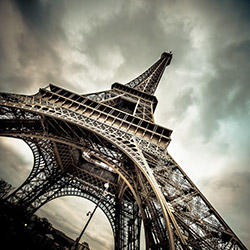
The Eiffel Tower remains the symbol most immediately associated with Paris. Built for the 1889 World’s Fair, it rises above the Champ de Mars and can be viewed from the Trocadéro, the riverbanks, and several surrounding streets.
The Arc de Triomphe stands in the centre of Place Charles de Gaulle, at the upper end of the Champs-Élysées. The avenue leads toward Place de la Concorde, the Tuileries Garden, and the Louvre, forming one of the capital’s great monumental routes.
Les Invalides is recognizable by its golden dome and notably contains Napoleon’s tomb. The Palais Garnier, the Panthéon, and Place des Vosges are also among the sites that reveal different periods of Parisian architecture.
Neighbourhoods with Distinct Atmospheres
Montmartre preserves the image of a former artists’ village. Its sloping streets lead to the Sacré-Cœur Basilica, which offers a wide view over Paris. Place du Tertre recalls the neighbourhood’s artistic history, although it is now heavily visited by tourists.
The Latin Quarter takes its name from the language once used in its educational institutions. Around the Sorbonne and the Panthéon, visitors will find bookshops, cinemas, cafés, and historic streets. The Luxembourg Garden provides a pleasant place to rest nearby.
The Marais combines private mansions, hidden courtyards, shops, museums, and reminders of the Jewish history of Paris. Saint-Germain-des-Prés evokes literary cafés, galleries, and the intellectual life of the Left Bank.
Other areas reveal a less monumental side of Paris. The Canal Saint-Martin attracts walkers with its footbridges and locks, while Belleville and Ménilmontant reflect a more working-class and multicultural city.
Museums and Cultural Life
The Louvre is both a former royal palace and one of the world’s largest museums. Its collections span numerous civilizations and periods, from antiquity to European art. A visit is best organized around a few departments or works rather than an attempt to see everything.
The Musée d’Orsay, housed in a former railway station, is devoted mainly to nineteenth-century art and holds an important Impressionist collection. The Musée de l’Orangerie is famous for Claude Monet’s large Water Liliespaintings.
The Musée Rodin, Musée Picasso, Musée de l’Armée, and numerous former homes of writers and artists offer more focused visits. Paris also has a rich theatrical, musical, and cinematic life that extends far beyond its major institutions.
Gardens, Squares, and Walks
Green spaces provide a welcome balance between indoor visits and long walks. The Tuileries Garden connects the Louvre with Place de la Concorde. The Luxembourg Garden combines flowerbeds, statues, ponds, and broad pathways.
The Palais-Royal offers a more intimate walk through its galleries and garden. The Parc des Buttes-Chaumont has an unusual landscape, with slopes, footbridges, and views over northeastern Paris.
Former railway lines, covered passages, and small streets also allow visitors to explore beyond the major tourist routes. Paris is often better understood by walking between two monuments rather than travelling directly from one to the other.
Cafés, Markets, and Specialties
A stay in Paris also involves bakeries, markets, and cafés. Baguettes, croissants, pastries, cheeses, and brasserie dishes are all part of the experience, but Parisian cuisine also reflects influences from every region of France and many other countries.
Markets provide an opportunity to observe local products and everyday habits. Sitting on a café terrace, dining on a quiet side street, or buying food for a picnic in a garden offers another way to experience the city.
The most heavily visited neighbourhoods do not always provide the best dining experiences. Walking only a few streets away from the major monuments often leads to establishments more commonly frequented by local residents.
Getting Around and Planning a Stay
The Metro quickly connects most central neighbourhoods, while buses allow passengers to see the city during the journey. Walking nevertheless remains essential because many details are found between the famous landmarks: façades, courtyards, bookshops, fountains, and small squares.
It is best to group visits by area. The Louvre, the Tuileries, and the Opéra district can form one day’s itinerary, while Notre-Dame, the Latin Quarter, and Saint-Germain can easily be combined. Montmartre deserves a separate route because of its hills and distinctive atmosphere.
Major museums and monuments sometimes require advance reservations. An overly busy schedule leaves little room for unexpected discoveries, even though they are among the greatest pleasures of a stay in Paris.
Quiz questions preview
-
Which square borders the 4th, 11th and 12th arrondissements?
Place des Fêtes | Place des Invalides | Place Dauphine | Place de la Bastille -
What was the Louvre's first function?
A museum | A fortress | A castle | A dungeon -
This square located in the middle of large theaters faces the Conciergerie on the Right Bank, on the other side of the Seine.
La place Vendôme | Place du Châtelet | La Place des Vosges | La place André-Malraux -
This old bell tower, located in a square that bears its name, is the only remnant of the church Saint-Jacques-la-Boucherie.
Tour Saint-Jacques | Tour du Châtelet | Tour du Campanile | Tour de l'Horloge -
Which square in the Chaillot district pays tribute to the United States for its help in the First World War?
Place Woodrow-Wilson | Place de la Liberté | Place des États-Unis | Place du Trocadéro

